You may already know all of this if you've been interested on art for a long time. Just in case, here's a list of the basics to start creating in a more stable, regular way.
1. ADAPTABLE MATERIAL
You don't have to buy the most expensive pencils or the best sketchbook on sale to draw. The most important is to feel comfortable with what one's making use of, and if it takes the cheaper material and notebook paper, best for you and your wallet. In my case, I work with Faber-Castell material and a thick page sketchbook when i'm doing a "serious" piece, and when I'm not... i work with whatever I can find. Just create.
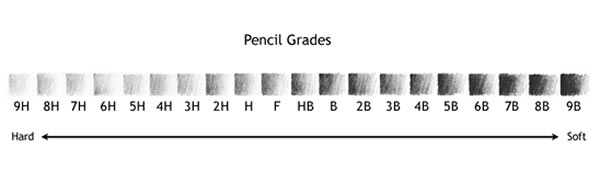
Keep in mind graphite is a tricky material to work with so you should look the hardness of your pencils up before you start. A harder pencil will be more discreet than soft pencils, and won't be prone to smudging.
2. WORK PLACE
Your optimal work place will vary depending on the kind of person you are and how easily you feel isnpired. You may be able to work sorrounded by distracions, anytime and anywhere; or you may not be able to pick a pencil up until certain conditions are given. That's why it's important to experiment with different sorroundings in order to help you figure out what you feel most comfortable sketching in.
Placement aside, my advice is that you involve yourself with whatever inspires you. Pictures, books, music, other people's art, people itself... finding your own personal aesthetic is not hard at all and it will help you imporve your drawings. What you should not do is let yourself be influenced by what you think your source of inspiration should be.
Quick advice: lots of artist make the mistake of letting themselves by what they think others want them to draw. You don't have to stick to drawing something just because your favourite artists do. It's the process of drawing what should feel pleasant, not just the final result.
(Fuente: Fia Celen)
3.REFERENCES
 There's a belief in the artistic community that using references is "cheating". That's an absolute lie. Plastic art is based on reproducing real life, and every artist need to do a previous study on what they wish to reproduce on paper or canvas. It's almost unavoidable: we do it without actually realizing it.
Anatomy books, photography books or even other people's artwork are great references you can use daily and will help you improve your perception of the real life world. This will be useful not only for realistic artists: if you like drawing in amore stylized way, you still should have an anatomic base to rely your drawing on.
Copying or tracing is another taboo existing in the artistic community, but it is in fact one of the most useful ways to get used to drawing a certain style or positioning object on paper. Most of the times, drawing from memory only will help us make the same mistake over and over again.
CAREFUL: with this i'm only alluding copying or tracing exclusively with learning purposes. Claiming other's artwork as yours is a degrading practice, wich is in fact a federal crime.